

The Australian Government released Budget 2026-27 tonight.
Last year’s Budget was delivered against an uncertain backdrop related to US tariff increases. This year, it’s the Middle East conflict taking centre stage.
Consequently, the Government is delivering modest cost of living support (fuel excise cut; worker tax offset) and is spending on aspects of the economy’s resilience (e.g. improving domestic fuel stocks over time).
Our two areas of focus in this Budget are:
what does it mean for aggregate demand and inflation?
will any policy reforms shift the dial on Australia’s productivity growth?
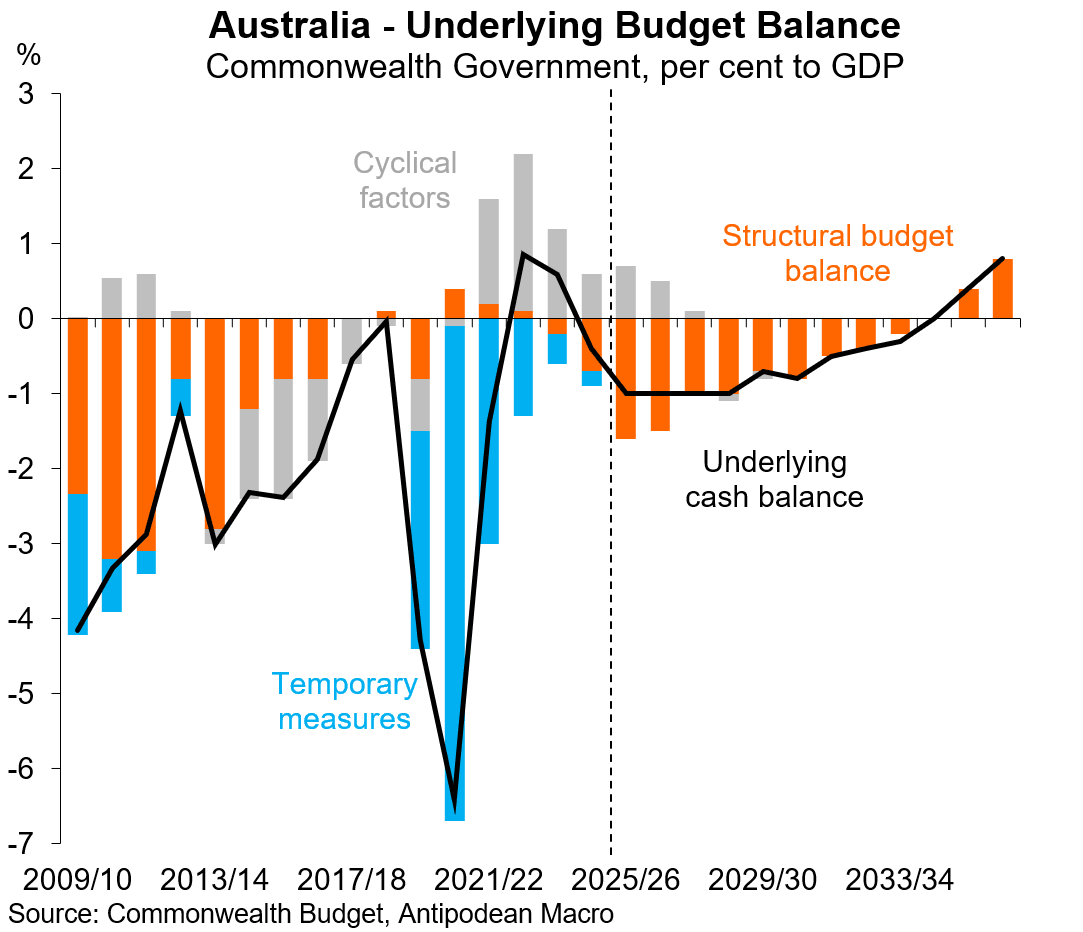
In short, net changes in this Budget are - at face value - unlikely to materially change the overall demand outlook in the near-term. For instance, the structural budget deficit is expected to be little changed as a share of GDP in 2026-27 - implying little federal fiscal impulse - compared with a noticeable deterioration in the current fiscal year.
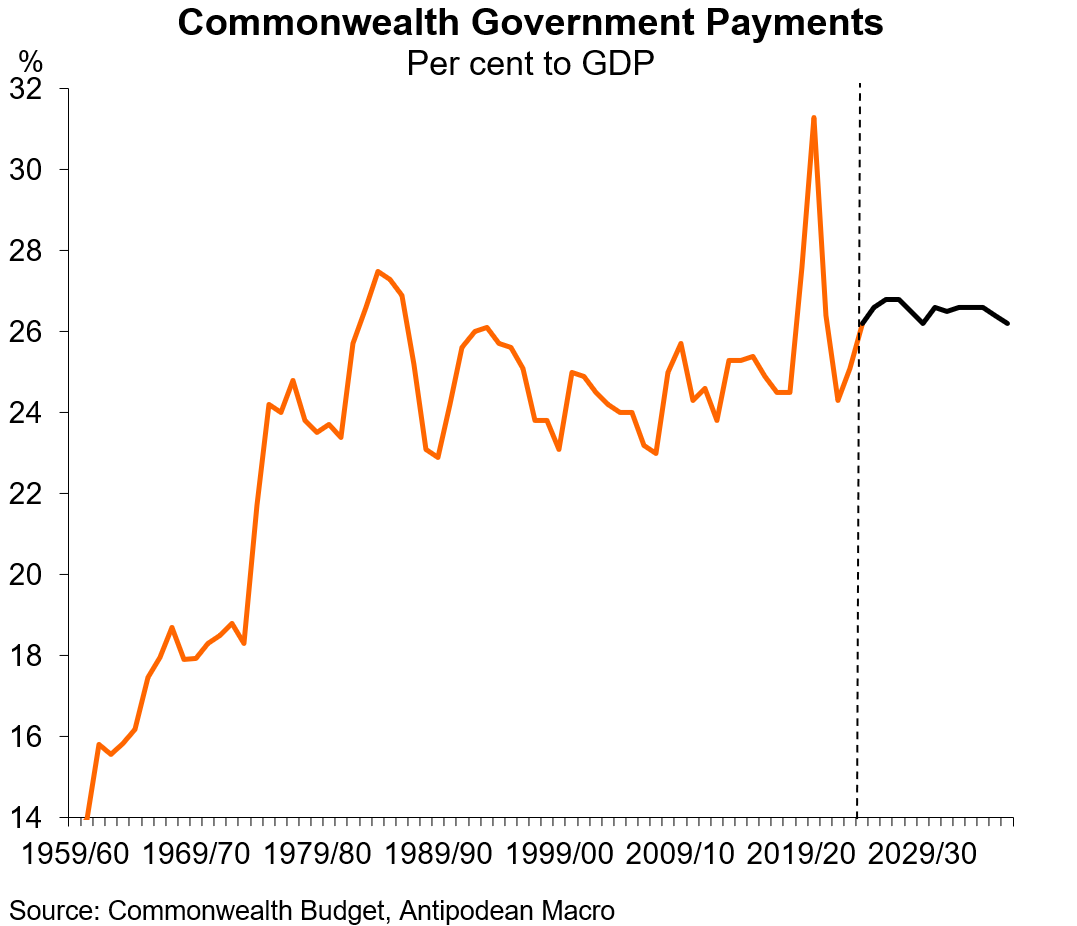
At the same time, however, federal government spending is expected to remain at a relatively high share of GDP. Add in what might be best described as reckless spending by some state governments and the public-sector’s contribution to economic growth is likely to remain quite solid overall.
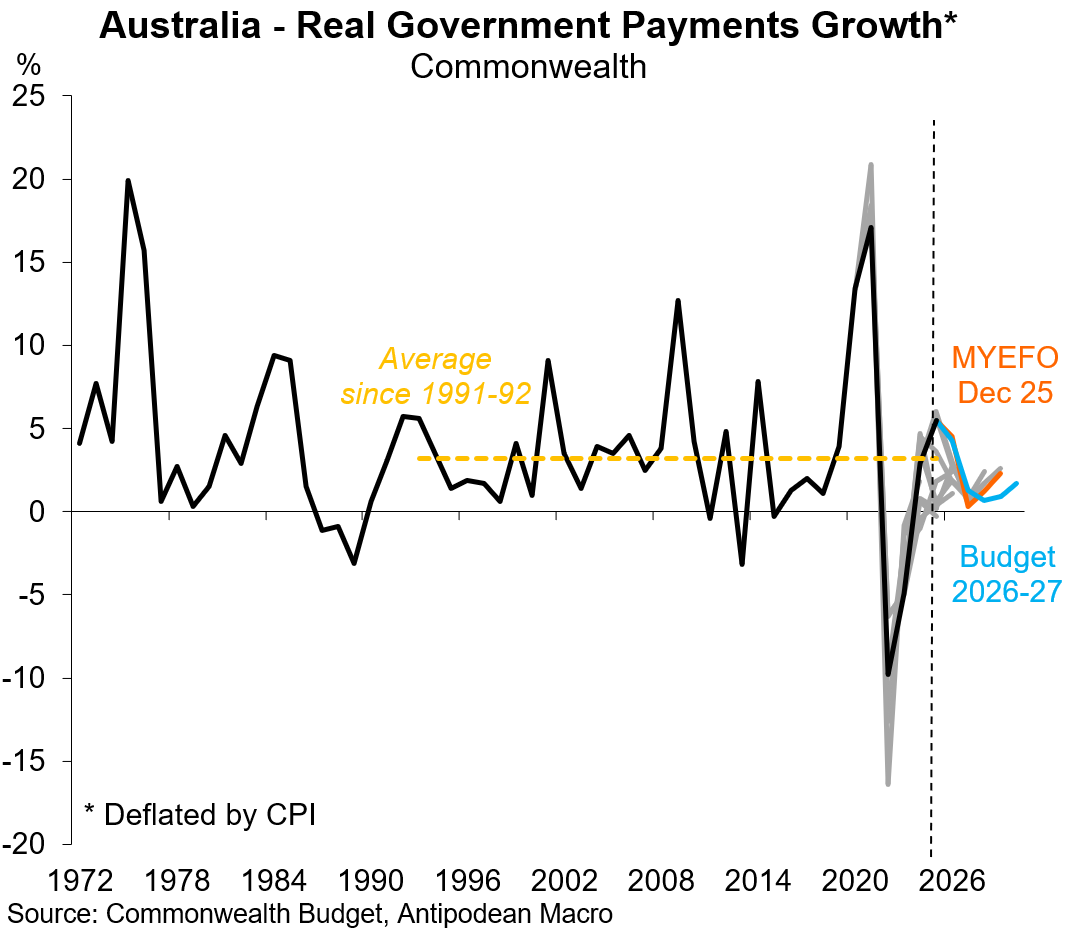
Moreover, prior budget forecasts of slower growth in federal government spending have proved wide of the mark.
The forecast slowing in real federal government payments growth remains significant from 2026-27. Achieving this, on the other hand, is a different matter, and relies heavily on successfully reining in NDIS-related spending growth.
On productivity, policy changes in the Budget are welcome but are likely to have only incremental effects on Australia’s productivity growth.
The Government should receive some kudos for tackling the spiralling cost of the NDIS as outlined in a recent speech by the Minister for Health. But to dress this up as “reform” is disingenuous when the reality is different. The significant expected budget savings associated with the NDIS - $37.8b over the 5 years to 2029-30 - are more akin to fixing something that is clearly broken rather than ‘reforms’ per se.
Without meaningful reform, the budget’s reliance on income tax as a source of revenue will only increase further, as it is forecast to in tonight’s Budget. This sets up the Government to announce income tax cuts in the lead up to the next election.
